

As organizations rethink network design and performance expectations, early collaboration with managed IT services teams helps ensure infrastructure planning keeps pace with expanding wireless capabilities.
Previous wireless generations focused on expanding coverage and increasing throughput. 5G introduces architectural changes that influence how data is processed, where workloads run, and how devices connect at scale.
As adoption continues, organizations must reassess how their infrastructure supports performance, security, and reliability. Decisions made now will determine whether IT environments remain adaptable or become strained as connectivity demands accelerate.
How 5G Differs from Previous Wireless Generations
5G represents a structural upgrade rather than a linear improvement over 4G LTE. It introduces higher bandwidth, ultra-low latency, support for massive device density, and flexible network slicing capabilities.
Bandwidth improvements enable faster data transfer across mobile and fixed wireless connections. This allows applications that once required wired connectivity to operate reliably over wireless links.
Latency reduction is one of the most transformative changes. 5G can reduce response times to milliseconds, which supports real-time analytics, automation, and interactive workloads.
Network slicing allows carriers to create multiple virtual networks on shared physical infrastructure. Each slice can be optimized for different performance, reliability, or security requirements.
These capabilities collectively push infrastructure away from centralized models. Systems increasingly distribute compute, storage, and security closer to where data is generated.
Why 5G Forces Rethinking Business IT Infrastructure
5G adoption changes how infrastructure is planned because connectivity is no longer the primary constraint. With faster and more reliable wireless links, applications and workloads can be deployed more flexibly.
This shift increases the number of connected endpoints across environments. Sensors, mobile devices, industrial equipment, and remote systems generate continuous data streams that must be processed and secured.
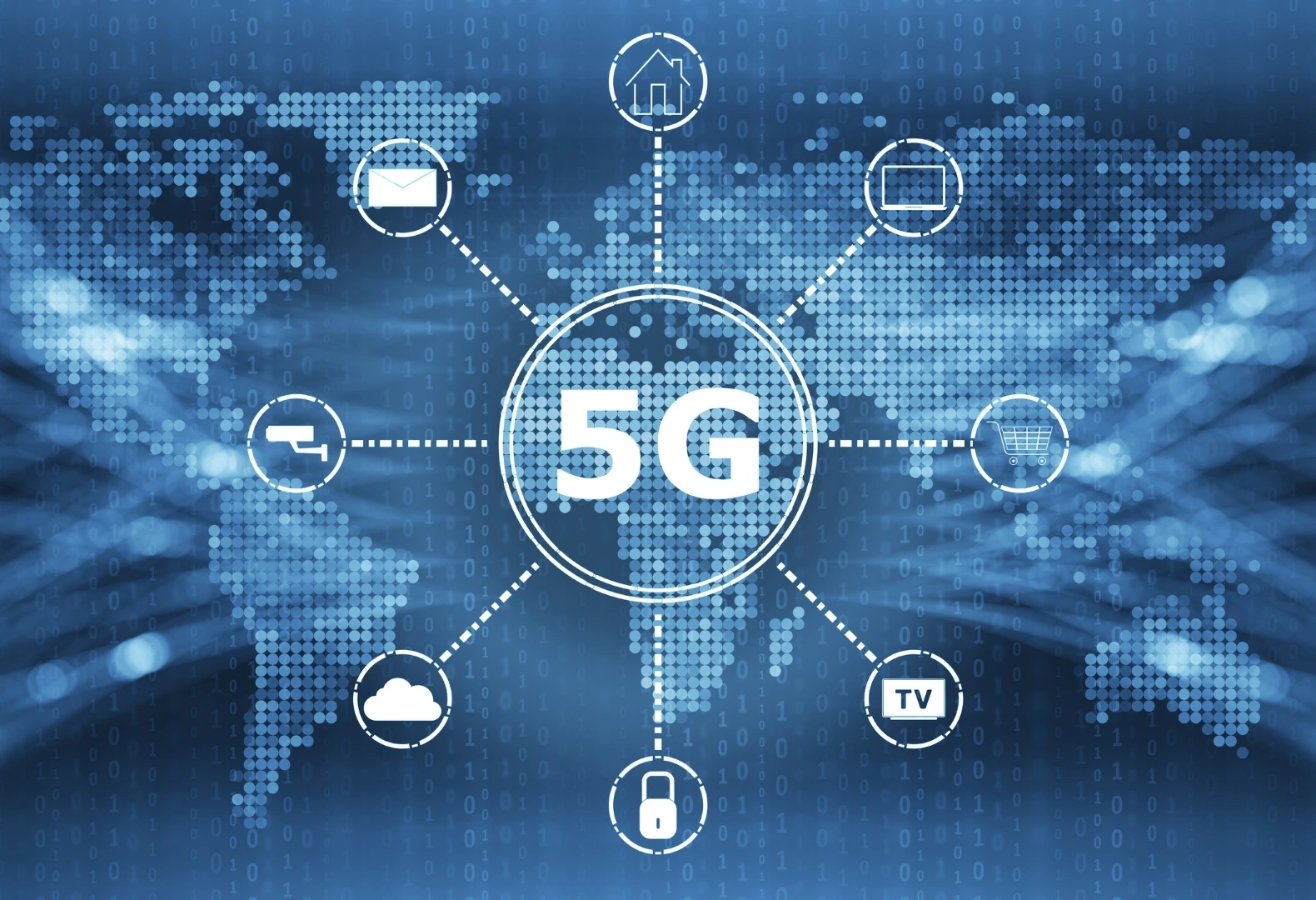
5G forces rethinking business IT infrastructure
Traditional hub-and-spoke networks struggle under this load. Infrastructure planning must now account for distributed traffic patterns and decentralized processing.
As reliance on wireless connectivity grows, infrastructure resilience becomes critical. Networks must support consistent performance even as device counts increase and workloads move closer to the edge.
Increased Device Density and Distributed Networks
One of the most visible impacts of 5G is the dramatic increase in device density it can support. 5G networks handle far more simultaneous connections than previous generations.
This enables large-scale IoT deployments across manufacturing floors, warehouses, offices, and remote sites. Devices that were once isolated can now participate in real-time data flows.
Distributed networks become essential in this environment. Traffic no longer flows exclusively to centralized data centers, which reduces bottlenecks but increases architectural complexity.
Infrastructure teams must design networks that manage local processing, regional aggregation, and cloud integration seamlessly. Without proper planning, device sprawl can overwhelm monitoring and security systems.
Edge Computing Becomes an Infrastructure Requirement
Edge computing gains relevance as 5G adoption expands. Processing data closer to the source reduces congestion and improves responsiveness.
Many workloads now benefit from localized compute resources. Video analytics, automation systems, and industrial monitoring rely on rapid feedback loops.
The combination of edge platforms and high-speed wireless connectivity enables new operational models. Applications can run where they deliver the most value rather than where infrastructure historically existed.
In practice, the integration of 5G and edge computing significantly reduces latency, which directly impacts application responsiveness and user experience. This improvement supports workloads that were previously impractical over wireless networks.
Cloud and Hybrid Architectures Expand Further
5G accelerates the move toward hybrid and multi-cloud environments. Wireless connectivity becomes reliable enough to support mission-critical applications outside traditional data centers.
Cloud platforms provide scalability and centralized management, while edge environments handle time-sensitive processing. This hybrid approach balances performance and flexibility.
Infrastructure planning must now consider how data flows between cloud, edge, and on-premises systems. Poorly designed architectures can introduce latency, security gaps, or management blind spots.
Organizations benefit from revisiting application placement strategies. Determining which workloads belong in the cloud, at the edge, or locally becomes a strategic infrastructure decision.
Network Architecture Changes Driven by 5G
Network architecture evolves as wireless connectivity becomes a primary access method. Fixed and wireless networks converge into unified platforms.
Routing strategies must accommodate dynamic traffic patterns. Applications may shift locations based on performance needs, availability, or cost considerations.
5G also supports private networks, which allow organizations to deploy dedicated wireless infrastructure for specific operational environments. These networks provide greater control and predictability.
Implementing these architectures often requires careful network installation planning to ensure coverage, redundancy, and integration with existing systems. Poor implementation undermines the benefits of 5G.
5G Network Security Implications
As networks expand and decentralize, security models must adapt. 5G increases the number of endpoints, access points, and data paths that require protection.
Traditional perimeter-based security becomes less effective. Traffic originates from many locations and flows across multiple environments.
Organizations must account for known 5G security risks, including increased exposure from IoT devices, signaling vulnerabilities, and misconfigured network slices. These risks require proactive mitigation strategies.
Security controls must extend consistently across cloud, edge, and wireless networks. Identity management, encryption, and continuous monitoring play central roles in protecting distributed infrastructure.
Monitoring and Visibility Challenges
5G introduces new complexity in monitoring application performance and network health. Distributed architectures generate more telemetry across more locations.
Legacy monitoring tools often lack visibility into wireless performance, edge workloads, and dynamic routing paths. Blind spots increase the risk of undetected failures or performance degradation.
Modern monitoring platforms must correlate data across networks, devices, applications, and security systems. This holistic view supports faster troubleshooting and informed decision-making.
Infrastructure teams benefit from automated alerts and analytics that highlight anomalies before they impact operations. Visibility becomes essential as environments scale.
Preparing Business IT Infrastructure for 5G Adoption
Preparation begins with assessing existing infrastructure capabilities. Networks, security tools, and application architectures must support increased throughput and reduced latency.
Capacity planning ensures systems handle higher traffic volumes without degradation. This includes evaluating bandwidth, compute resources, and storage performance.
Policy updates are equally important. Access controls, device onboarding procedures, and segmentation strategies must align with expanded connectivity.
Organizations that proactively optimize your IT infrastructure reduce friction during 5G adoption. Optimization creates a stable foundation for future growth and flexibility.
Device Management and Operational Complexity
Managing thousands of connected devices introduces operational challenges. Each device represents a potential failure point or security risk.
Lifecycle management becomes critical. Devices must be tracked, updated, secured, and retired systematically.

The business impact of 5g
Automation tools help manage this complexity by enforcing consistent configurations and security policies. Manual processes do not scale effectively in 5G environments.
Strong governance frameworks ensure that device growth does not compromise stability or security. Clear ownership and accountability support sustainable expansion.
The Business Impact of 5G Growth
Global adoption trends highlight the scale of change underway. The number of 5G global connections is projected to hit 7.7 billion by 2028.
This growth reflects widespread reliance on wireless connectivity for core operations. Infrastructure that cannot support this scale risks becoming a bottleneck.
Organizations that adapt early gain performance advantages and operational flexibility. Those that delay may face costly retrofits or performance limitations.
Planning for growth ensures infrastructure investments remain aligned with long-term connectivity trends.
Strategic Partnerships and Managed Support
Navigating 5G-driven infrastructure changes often requires specialized expertise. Internal teams may lack experience with distributed wireless architectures and edge platforms.
Strategic partnerships help bridge this gap. Experienced providers support planning, deployment, monitoring, and security integration.
Working with a local managed IT services provider improves consistency and reduces operational risk. External expertise complements internal capabilities.
Local insight improves execution quality by aligning infrastructure design with regional connectivity options and compliance requirements.
Supporting 5G-Driven Business IT Infrastructure Transformation
5G reshapes how infrastructure is designed, secured, and managed, requiring thoughtful planning and continuous adaptation. Preparing for increased connectivity, distributed workloads, and expanded security responsibilities ensures systems remain resilient and scalable.
At Be Structured, we help organizations navigate 5G-driven infrastructure changes through scalable networking, integrated security, and industry-specific IT solutions. Schedule a free consultation today to align your business IT infrastructure with today’s demands.
FAQs about 5G Networks’ Impact on IT Infrastructure
-
How does 5G impact business IT infrastructure?
5G enables faster speeds, lower latency, and higher device density, which pushes infrastructure toward distributed, edge, and hybrid architectures. Businesses must redesign networks, security, and monitoring to support these changes. -
What is the difference between 5G and 4G for enterprise networks?
5G offers significantly lower latency, higher bandwidth, and support for many more connected devices. It also introduces network slicing and better support for real-time and mission-critical workloads. -
Why does 5G increase the need for edge computing?
5G reduces latency enough to make local data processing practical and efficient. Edge computing minimizes delays and congestion by processing data closer to where it is generated. -
How does 5G affect network architecture design?
5G shifts networks from centralized hub-and-spoke models to distributed architectures. Traffic flows dynamically across edge, cloud, and on-premises systems. -
What security risks does 5G introduce for businesses?
5G expands the attack surface through more devices, endpoints, and wireless connections. Strong identity management, encryption, and continuous monitoring are required to mitigate risk. -
How should businesses prepare their IT infrastructure for 5G?
Preparation includes assessing network capacity, updating security policies, and ensuring systems support higher throughput and lower latency. Proactive infrastructure optimization reduces disruption during adoption. -
What role do private 5G networks play in enterprise IT?
Private 5G networks give organizations greater control over performance, security, and reliability. They are often used in manufacturing, logistics, and campus environments. -
How does 5G impact cloud and hybrid IT environments?
5G strengthens hybrid models by enabling reliable wireless access to cloud and edge workloads. Businesses must plan how data moves between environments to avoid latency and security gaps. -
Why is monitoring more complex in 5G environments?
Distributed workloads and wireless connectivity generate more telemetry across more locations. Modern monitoring tools are required to maintain visibility and detect issues early. -
Do businesses need managed IT services for 5G adoption?
Many organizations benefit from managed IT services due to the complexity of 5G, edge, and security integration. Expert support reduces risk and accelerates successful deployment.
