

To succeed with Manufacturing 4.0, companies must design IT frameworks that enhance connectivity, secure vast amounts of data, and streamline production processes.
Why Managed IT Services for Manufacturing Has Become a Core Requirement
Manufacturers adopting smart systems cannot rely solely on machinery upgrades. Every automated line and digital sensor depends on a strong IT backbone. Without reliable networks and data systems, factories risk downtime, security gaps, and underutilized technology.
Implementing IT manufacturing strategies also ensures that connected devices and platforms work seamlessly. These systems must handle real-time data processing, cloud integration, and cybersecurity, all while supporting compliance obligations.
The Role of IoT in Smart Factory Infrastructure
Industrial IoT devices provide granular insights into performance and quality. Sensors track equipment health, detect anomalies, and send alerts before breakdowns occur. However, each connected device creates new demands on IT infrastructure.
To make IoT viable at scale, factories need robust networks with low latency, automated monitoring, and tools to prevent overload. At the same time, system visibility becomes vital because IT teams must know exactly how devices are functioning to avoid blind spots.
Data as the Foundation of Manufacturing 4.0
Data collection has become one of the most valuable assets in modern manufacturing. Machines, sensors, and even supply chain platforms produce constant streams of information. The challenge lies not in collecting data but in managing it effectively.
Manufacturers must build systems capable of storing, analyzing, and visualizing insights. Cloud platforms, data warehouses, and AI-powered dashboards make real-time decision-making possible. For companies hesitant to move fully to the cloud, hybrid approaches allow for both speed and compliance.
Cybersecurity as a Manufacturing Priority
A connected factory faces more risks than traditional operations. Cyberattacks targeting operational technology (OT) systems can halt production lines and cost millions in downtime. The manufacturing sector is among the top five industries hit by ransomware.
Protecting factories requires advanced cybersecurity controls. Monitoring tools, endpoint protection, and secure remote access are essential. Employees also need training to recognize phishing and insider risks. A comprehensive cybersecurity plan ensures resilience while protecting intellectual property.
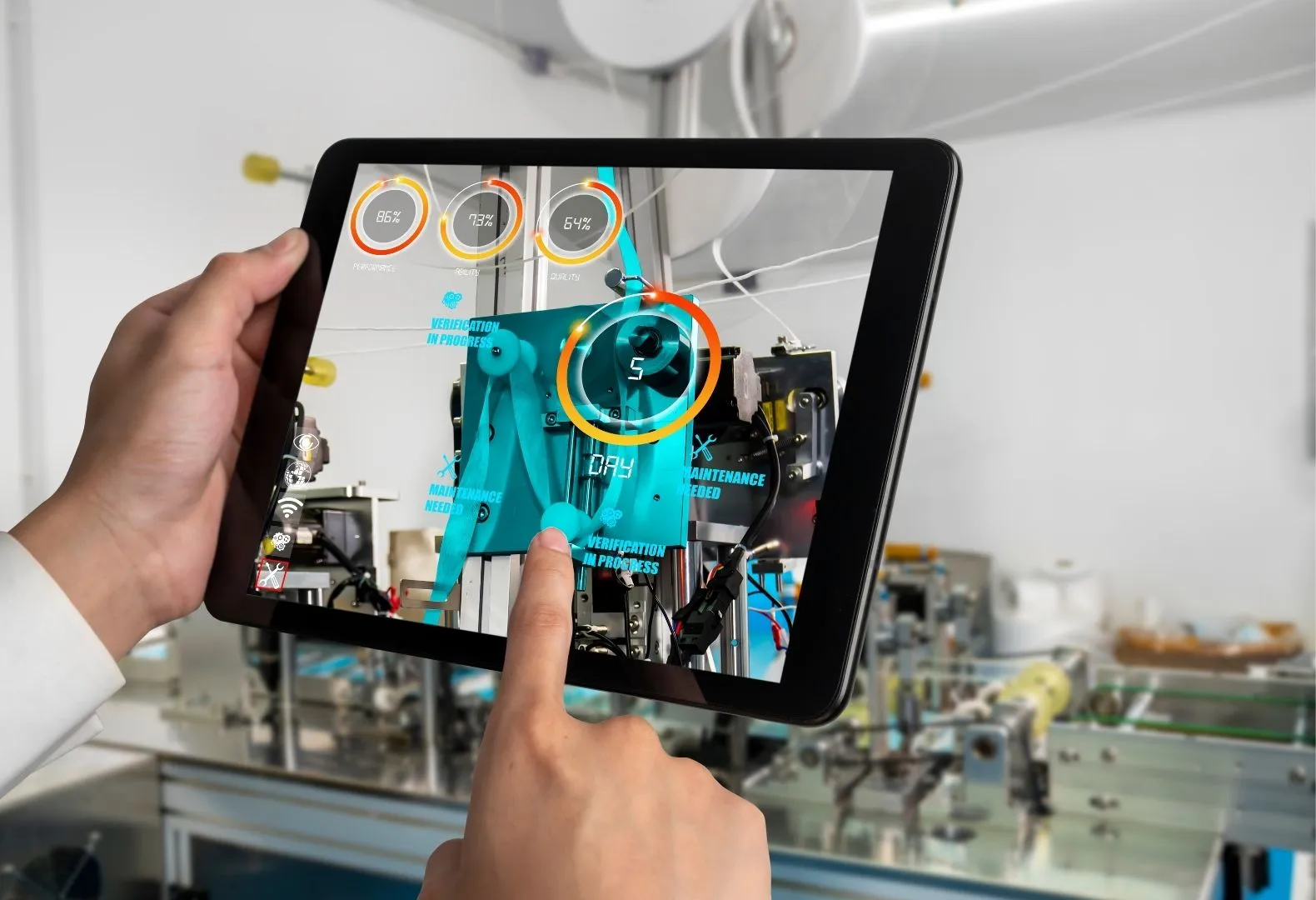
A manufacturing company using industrial IoT.
Workforce Training and Adoption
The success of smart factories relies on human expertise. As new technologies arrive, IT and production teams must learn how to integrate and operate them effectively. Without ongoing training, businesses risk adopting tools that are never fully utilized.
Upskilling programs help bridge the gap between traditional operations and advanced systems. Training reduces resistance to change and allows staff to maximize the potential of new digital investments.
IT Solutions for Manufacturing That Enable Smart Manufacturing
No two factories have identical needs, which is why manufacturers are increasingly turning to tailored IT strategies. IT solutions for manufacturing include advanced ERP systems, predictive analytics, and cybersecurity protections designed for industrial operations.
These solutions enhance supply chain visibility, automate compliance reporting, and allow production managers to act quickly when disruptions occur. A flexible IT roadmap ensures that investments align with long-term business goals.
Adoption Rates and Market Momentum
Global adoption of smart factory technologies is accelerating. A recent industry report shows that 56% of manufacturers are piloting smart manufacturing, 20% are using it at scale, and 20% are planning to invest in it. While adoption is growing, scaling remains a challenge for smaller manufacturers with limited IT resources.
Companies that invest early in scalable systems tend to reduce operational costs faster and stay more resilient against disruptions.
Why Around-the-Clock IT Support Is Essential
Manufacturing rarely operates on a 9-to-5 schedule. Production often runs 24/7, and downtime at any hour can cause major financial losses. Having all-day IT support for manufacturing companies ensures quick responses to outages, network issues, and cyber incidents.
Support teams that understand factory environments can address problems without slowing production. Around-the-clock assistance has become a competitive necessity for global manufacturers.
Managed IT Services for Industry 4.0
The complexity of Industry 4.0 often exceeds the capacity of in-house IT teams. This is why many companies rely on managed IT services for manufacturing companies. Outsourcing provides access to experts in IoT, cloud, and cybersecurity, all without requiring significant hiring.
Managed service providers can monitor systems in real time, prevent downtime, and ensure compliance with regulatory standards. This model reduces strain on internal staff while boosting operational efficiency.
Competitive Advantages of Smart Factory IT
The competitive advantage of IT solutions for smart factories lies in efficiency, security, and scalability. Factories that embrace digital transformation are able to minimize downtime, predict equipment failures, and achieve faster time-to-market.
Beyond efficiency gains, IT-driven automation enhances quality control, improves supply chain coordination, and provides a clear edge in highly competitive markets.
Cloud and Edge Computing in Smart Factories
As data volumes grow, manufacturers must rethink how they process information. Cloud platforms enable large-scale storage and advanced analytics, while edge computing ensures critical decisions happen on-site without latency.
A hybrid cloud-edge approach allows manufacturers to balance speed with scalability. While the cloud centralizes analytics, edge devices handle immediate tasks like machine adjustments or safety triggers. Together, they form a resilient architecture for smart factory operations.
Digital Twin Technology and Predictive Maintenance
One emerging trend in IT manufacturing is the use of digital twins, or virtual replicas of physical machines. These models allow manufacturers to simulate operations, test changes, and predict equipment failures before they occur.
Digital twins reduce maintenance costs and extend equipment lifespan. When combined with predictive analytics, they help factories schedule repairs strategically instead of reacting to sudden breakdowns.
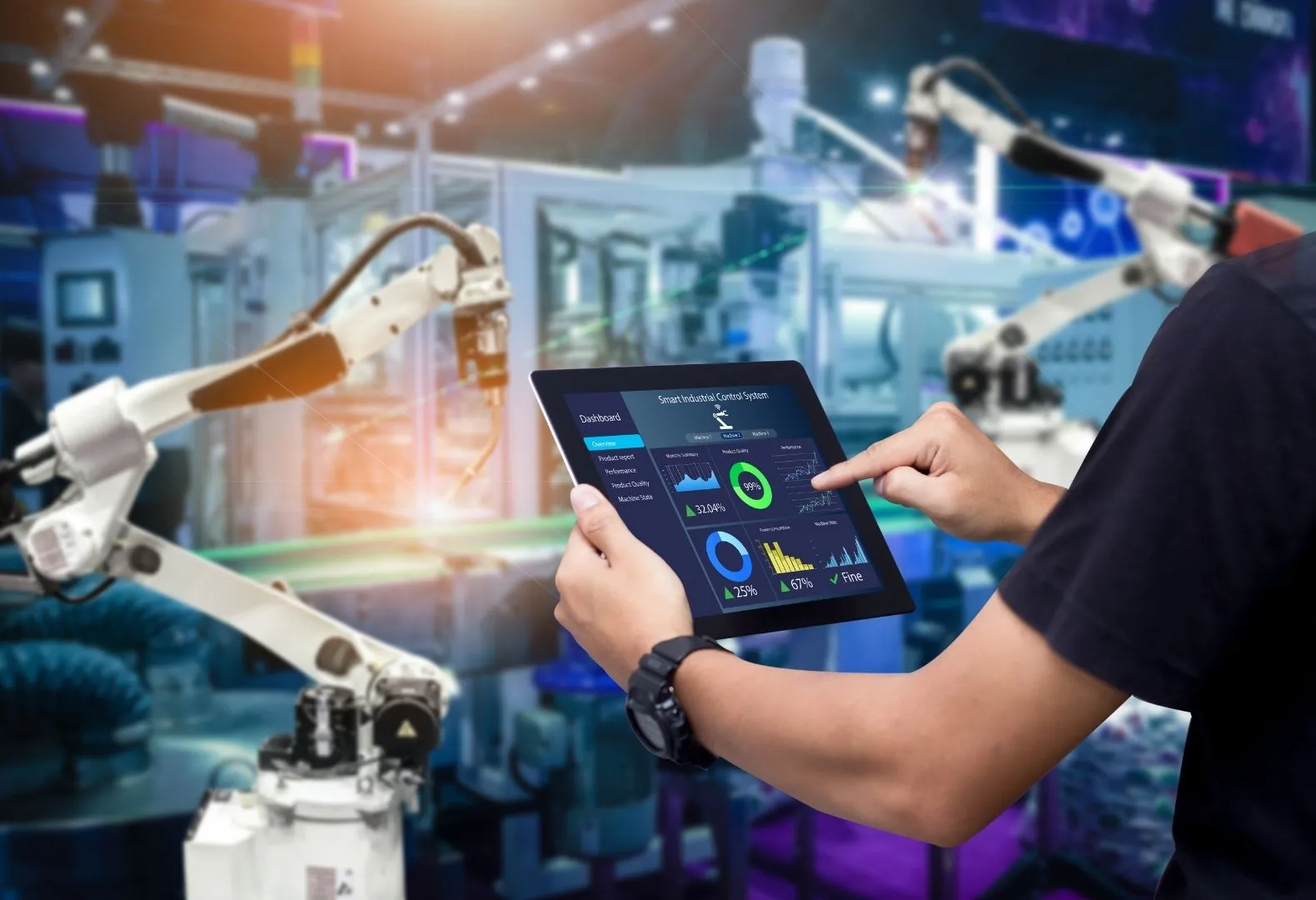
A worker in a smart factory controlling production.
Industry 4.0 Explained
Industry 4.0 is the term used to describe the fourth industrial revolution, driven by automation, AI, IoT, and advanced analytics. It is a broad movement that covers not only manufacturing but also logistics, energy, healthcare, and other industries adopting smart systems.
At its core, Industry 4.0 integrates cyber-physical systems with digital platforms. Machines can communicate with each other, adapt to changing conditions, and support human decision-making with predictive insights. This marks a shift from traditional automation to truly intelligent operations.
Manufacturing 4.0 vs. Industry 4.0
Although the terms are often used interchangeably, they are not the same. Industry 4.0 is a broader concept that applies across industries. Manufacturing 4.0 is the subset focused specifically on the factory floor.
Manufacturing 4.0 applies Industry 4.0 principles in production environments, emphasizing automation, robotics, and predictive maintenance. While Industry 4.0 might include smart healthcare or logistics systems, Manufacturing 4.0 zeroes in on how connected IT systems transform the way products are designed, built, and delivered.
Understanding this distinction helps businesses allocate resources more effectively. Factories implementing Manufacturing 4.0 strategies are part of the broader Industry 4.0 movement but with a sharper focus on physical production and operational efficiency.
Industry 4.0 as a Global Shift
Industry 4.0 is revolutionizing the way companies manufacture. From robotics and 3D printing to AI-driven supply chains, the future of production depends on the seamless integration of IT and operations.
For manufacturers in Los Angeles and beyond, the challenge lies in balancing modernization with security, compliance, and workforce readiness. Those who succeed will stay competitive in an increasingly digital global market.
Building the Smart Factory of Tomorrow
Smart factories depend on IT as much as machinery. From IoT sensors to predictive analytics, every aspect of Manufacturing 4.0 requires reliable, secure, and scalable systems. Companies that invest in the right infrastructure gain efficiency, resilience, and long-term growth.
At Be Structured, we provide tailored IT solutions for manufacturing that align technology with operational needs. Our expertise covers automation, cloud integration, and cybersecurity for industrial environments. Schedule a free consultation today.
